
Hepatitis B (HepB) is an infection of the liver that can lead to chronic disease requiring lifelong treatment and an increased risk of cancer and death. The HepB vaccine has minimal risks and many benefits. Skipping the birth dose leaves infants vulnerable to a lifelong risk of chronic liver disease and cancer. This is why your baby (or you, if you’ve never been vaccinated) should get the vaccine.
- We tried the “targeted risk” approach. It didn’t work.
Shortly after licensing in the early 1980s, the Hepatitis B vaccine was recommended for healthcare workers, people on hemodialysis, those who inject drugs, and people with multiple sexual partners, but not healthy or unexposed children or infants. Over the next several years, about 18,000 U.S. infants and children in the US contracted HepB annually. Half of these were born to mothers without HepB.
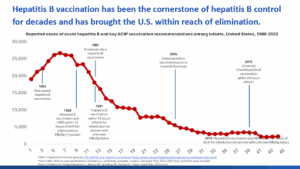
Figure (slide 13): HepB cases initially rose after the introduction of risk-based vaccination. Universal vaccination has led to a significant decline in HepB.
- HepB vaccines have been available and safe for almost 40 years.
There is no link between the vaccine and Sudden Infant Death Syndrome (SIDS), increased death, or autoimmune disorders. Monitoring for serious vaccine side effects continues indefinitely. Multiple nationwide data systems monitor hospital data for these events. The HepB vaccine has been monitored for almost 40 years.
- Everyone who is unvaccinated is at risk of the disease.
HepB can spread through sex and needle sharing, but it can also spread through other forms of close contact. Even invisible amounts of blood on shared items can transmit the virus, which survives up to 7 days on surfaces. One study found that more than half the adults infected had no known risk factors. Another study among South East Asian refugees found 21% of infants with the disease had no positive household contacts.
- Most people don’t know they have the disease.
HepB infection often has no symptoms. Children under 5 rarely have symptoms of infection, and children and adults older than 5 have symptoms only about 30-50% of the time.
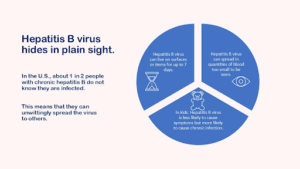
Image source: Photo-Restricted-VEC-hepb-hides-plain-sight-2624×1720-v01.jpg (1280×720)
- A mother’s HepB status alone is not enough to guide shared decision making for vaccination.
In the US, 1 in 8 mothers are not properly screened and screening takes place early in pregnancy, so infection can occur anytime between then and delivery. Only about half of infants born to positive HepB mothers are correctly identified.
Even if maternal screening is done properly, this practice addresses just one of many possible forms of transmission. To holistically assess risk for infants via screening alone, we would need to screen all adults that care for the infant, inside and outside the home, including family members and childcare providers. It is impossible to know the HepB status of everyone and everything our babies come in contact with.
- Delaying the birth dose for infants of HepB negative mothers by just 2 months will have huge repercussions
A mother’s HepB status is often misinterpreted or fails to get transmitted to the birth hospital. The Immunization Action Coalition documented more than 500 transmissions of HBV in these types of situations from 1999 to 2002.
Ninety percent of infants infected with HepB at birth develop lifelong disease. A birth dose of HepB serves as a safety net, protecting all newborns, even those who may fall through the gaps that exist in our current system. With minimal risks and multiple benefits, a birth dose will protect our children, especially the most vulnerable. If you have any concerns, questions, or want to speak further about vaccines, reach out to your trusted clinician.