We Missed Some Important Things. You Told Us. We Listened. 🧡
A conversation with Priscilla Corson, AuDHDer and therapist
Hosted by MK Haber, Executive Director, Those Nerdy Girls &+
Recorded April 17, 2026
A note before we begin:
In February, Those Nerdy Girls published a post on therapies for autism spectrum disorder. Our goal was definitely in line with what we do here: debunk genuinely dangerous or ineffective “treatments” like bleach and chelation. But we missed something important. We listed Applied Behavior Analysis (ABA) as safe and effective, and you, our readers let us know, clearly and firmly, that we hadn’t captured the full story.
You were right.
Your incoming comments showed us our community doing exactly what we have tried to cultivate: a safe space for us all learning and growing together, holding each other accountable with evidence, lived experience, and care. Autistic adults. Clinicians. Researchers. Parents. Friends.
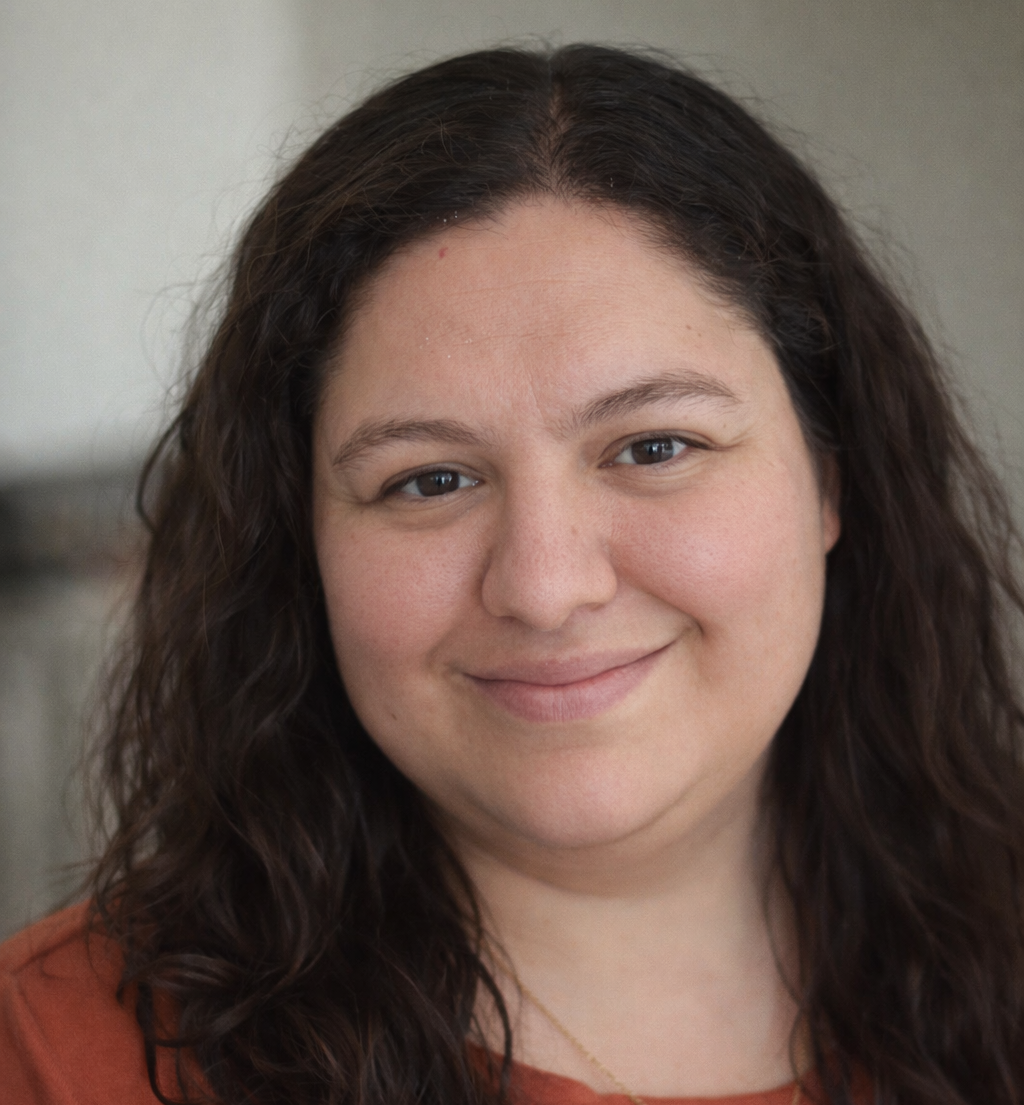
I was relaying this to a friend and fellow clinician and they said, “I have got to connect you with Priscilla Corson!” Priscilla is an autistic ADHDer, Latinx therapist, and neurodiversity nerd whose special interest is exactly this terrain. I want you to hear directly from her. This conversation is our answer to your questions and concerns. From all of us at Those Nerdy Girls, thank you for being in this with us.🙏
— MK
MK: Priscilla, before we get into ABA (Applied Behavior Analysis) specifically, can you help us understand where it came from? Because I think most people encounter it without any historical context at all.
Priscilla: Understanding and language around Autism in general has evolved so much. And to understand ABA, you have to understand what was happening before it existed.
There was a period of time when autism was being essentially discovered, or more accurately, a label was being defined. Clinicians were trying to identify a set of symptoms that would eventually become what informed the DSM (Diagnostic and Statistical Manual of Mental Disorders) criteria. And at the time, they didn’t know what might be leading to autism, or why certain individuals presented as autistic. This is an oversimplification but you essentially had an entire camp that blamed parents. “Non-nurturing” mothers were called “refrigerator moms.” Children were removed from their homes. They essentially became science experiments.
And when you really think about that terminology, refrigerator mom, you’re probably talking about another autistic human who didn’t have a diagnosis. Who didn’t have the right supports for themselves, and therefore didn’t have the right supports for their children.
Eventually, parents got fed up. They pushed back. ABA, a form of behaviorism, became popular to address the horrors of autistic kids being institutionalized. It was kind of the next generation that would define the autistic parental movement. A way of keeping their children in the home, and refusing to frame them as broken.
MK: So ABA started as an act of protection.
Priscilla: In a lot of ways for parents, yes. And that matters for how we hold this history. Those parents were responding to something genuinely harmful. The problem is that the model they and the clinicians of the time adopted still had behavioral adaptation at its core: teaching children to survive in a neurotypical society, rather than asking whether that society needed to change.
And then something shifted. Those children grew up. In the mid 90s you had this wonderful, beautiful movement emerge, the Neurodiversity Movement, driven by autistic adults who had been through ABA themselves. They pushed toward things that were more neuroaffirming. They pushed against being forced to mask, to perform neurotypically. They wanted to be able to freely express themselves. And in that, we learned a lot. The DSM criteria actually changed.
MK: Let’s talk about masking, because I think it’s central to understanding the critique of ABA. What is it, and why does it matter?
Priscilla: Masking is when autistic people suppress or hide their autistic traits, things like stimming, differences in eye contact, communication style, in order to blend in and appear neurotypical. And we are growing in our understanding that chronic masking causes real harm. Chronic fatigue. Gut issues. Depression, anxiety. Significant health consequences, because that stress is going somewhere else in the body.
ABA, at its core, teaches masking. It’s focused on observable, external behavior, and it measures success by how much less autistic a child appears. It doesn’t ask about the internal experience of that child.
MK: And yet you’ve said that masking can’t be fully eliminated. That’s where the nuance really lives.
Priscilla: Right. And this is where I have to bring in my own perspective as a Latinx clinician, because this is not a one-size-fits-all conversation.
Society hasn’t evolved enough to fully hold space for neurodivergent people yet. And we know that the mass elimination of masking as a concept would be disproportionately harmful to minority communities.
Brown and Black autistic communities are already saying: we appreciate the visibility this movement has brought, but this conversation has swung to the opposite extreme. It’s not capturing the full scope of the spectrum, and it’s not capturing what might only be accessible to us.
So there’s a difference between masking as identity erasure, which is harmful, and having the capacity to modulate your presentation in specific, high-stakes contexts. For a lot of autistic people of color, that capacity is not about fitting in socially. It can be about survival. Navigating encounters with law enforcement, for example. Moving through systems that were never designed with them in mind.
MK: Ok, the goal is to give people the tools, so that if they’re in a situation where their safety is at stake, they have a choice.
Priscilla: Exactly. I always tell my late diagnosed adult clients: you now have three choices. You can mask. You can unmask. Or you can accommodate yourself. Before this choice may not have been happening consciously. And the goal is to teach not masking itself, but what masking feels like in your body, so that you know when you’re doing it, and you’re doing it by choice, not because someone trained it into you.
Because a lot of people don’t even know when they’re masking. They’ve been doing it so long it feels like just existing but not understanding why they feel chronically exhausted and burned out. And we don’t want that. We want people to have genuine choice.
MK: Where does that leave ABA? You mentioned there are clinicians trying to do it in a more neuroaffirming way.
Priscilla: There are good clinicians out there who are ABA clinicians and are genuinely attempting to be more neuroaffirming. But here’s the thing: if you remove the human element from the equation, if you just look at what ABA is at its basis, the core of it is still problematic. It’s teaching behavioral adaptation for survival in a neurotypical society. Which is really not what we’re looking for.
What we’re looking for is full acceptance and inclusion for people to exist within their primary neurotype. As they are.
It’s the same arc we’ve seen in the LGBTQ+ movement. We’ve had enough conversation to establish that people can be who they are, love who they love, but we haven’t gotten to the next question, which is: why is this still a conversation? Why are we still accommodating the discomfort of the majority rather than asking the majority to expand?
The autistic community is in similar places. We have some supports. We need more supports in many neurotypical contexts. Would we need all the same supports if people were actually allowed to exist in their primary neurotype? Can differences be allowed? Would this reduce the number of supports we need?
MK: That parallel is so clarifying. It reframes the whole question.
Priscilla: And I think you’re starting to see a newer movement emerging, beyond the original neurodivergent focused movement, that’s exploring neurodiversity as a whole. This concept that everyone can exist, that there are predominant neurotypes, and that difference isn’t deficit. It’s very new. But the direction is clear: things need to keep evolving. We need to keep having change.
MK: What do you want families, especially families who have already used ABA or are being told it’s the only evidence-based option, to hear from this conversation?
Priscilla: I think I want them to hear that this isn’t about blame. The parents who turn to ABA are doing the best they can with what’s available. Just like the parents who fought against the “refrigerator mom” era were doing the best they could.
What we know now is that we can do this work in a much more neuroaffirming way. Ways that support the individual and their autism without ever forcing them to mask, and instead give them choice. Speech therapy, OT, neuroaffirming approaches, when done well and with the right lens, can be genuinely supportive because they work with the person. They build on strengths and address real barriers that the person themselves wants support with.
That’s a different thing entirely from training a child to perform neurotypically for the comfort of the adults around them.
And the conversation isn’t over. It keeps evolving. Which means we have to keep evolving with it.
Those Nerdy Girls thank Priscilla Corson for her time, her expertise, and her generosity in helping us deepen our understanding of this topic.
With appreciation,
Those Nerdy Girls &+🧡🤓